Broccoli 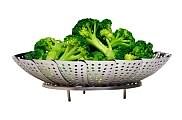
Broccoli is a member of the cabbage family, and is closely related to cauliflower. Its cultivation originated in Italy. Broccolo, its Italian name, means "cabbage sprout." Because of its different components, broccoli provides a range of tastes and textures, from soft and flowery (the floret) to fibrous and crunchy (the stem and stalk). Do not let the smell of the sulfur compounds that are released while cooking keep you away from this highly nutritious vegetable.
This chart graphically details the %DV that a serving of Broccoli provides for each of the nutrients of which it is a good, very good, or excellent source according to our Food Rating System. Additional information about the amount of these nutrients provided by Broccoli can be found in the Food Rating System Chart. A link that takes you to the In-Depth Nutritional Profile for Broccoli, featuring information over 80 nutrients, can be found under the Food Rating System Chart.
Health Benefits
Protection against Cancer
Like other cruciferous vegetables, broccoli contains the phytonutrients sulforaphane and the indoles, which have significant anti-cancer effects. Research on indole-3-carbinol shows this compound helps deactivate a potent estrogen metabolite (4-hydroxyestrone) that promotes tumor growth, especially in estrogen-sensitive breast cells, while at the same time increasing the level of 2-hydroxyestrone, a form of estrogen that can be cancer-protective. Indole-3-carbinol has been shown to suppress not only breast tumor cell growth, but also cancer cell metastasis (the movement of cancerous cells to other parts of the body).
Scientists have found that sulforaphane boosts the body's detoxification enzymes, potentially by altering gene expression, thus helping to clear potentially carcinogenic substances more quickly. When researchers at Johns Hopkins studied the effect of sulphoraphane on tumor formation in lab animals, those animals given sulforaphane had fewer tumors, and the tumors they did develop grew more slowly and weighed less, meaning they were smaller.
A study published in the cancer journal, Oncology Report demonstrated that sulforaphane, which is a potent inducer of Phase 2 liver detoxification enzymes, also has a dose-dependent ability to induce cell growth arrest and cell death via apoptosis (the self-destruct sequence the body uses to eliminate abnormal cells) in both leukemia and melanoma cells.
Sulforaphane may also offer special protection to those with colon cancer-susceptible genes, suggests a study conducted at Rutgers University and published online in the journal Carcinogenesis.
In this study, researchers sought to learn whether sulforaphane could inhibit cancers arising from one's genetic makeup. Rutgers researchers Ernest Mario, Ah-Ng Tony Kong and colleagues used laboratory mice bred with a genetic mutation that switches off the tumor suppressor gene known as APC, the same gene that is inactivated in the majority of human colon cancers. Animals with this mutation spontaneously develop intestinal polyps, the precursors to colon cancer.
The study revealed that in animals fed sulforaphane, tumors were smaller, grew more slowly and had higher apoptotic (cell suicide) indices. Additionally, those fed a higher dose of sulforaphane had less risk of developing polyps than those fed a lower dose.
The researchers found that sulforaphane suppressed certain kinase enzymes. Kinases are cell signaling enzymes that are present not only in animals, but also in humans. The kinases suppressed by sulforaphane signal celluar activites that promote colon cancer.
According to lead researcher, Dr. Kong, "Our study corroborates the notion that sulforaphane has chemopreventive activity…Our research has substantiated the connection between diet and cancer prevention, and it is now clear that the expression of cancer-related genes can be influenced by chemopreventive compounds in the things we eat."
Another study, published in Cancer, the journal of the American Cancer Society, looked at indole-3-carbinol (I3C), a naturally occurring component of Brassica vegetables, such as broccoli, cabbage, and Brussels sprouts. I3C has been recognized as a promising anticancer agent against certain reproductive tumor cells. This laboratory study evaluated I3C's effects on cell cycling progression and cancer cell proliferation in human prostate cancer cells. I3C was shown to suppress the growth of prostate cancer cells in a dose-dependent manner by blocking several important steps in cell cycling and also to inhibit the production of prostate specific antigen (PSA), a protein produced by the prostate whose rising levels may indicate prostate cancer. Researchers noted that the results of this study demonstrate that "I3C has a potent antiproliferative effect" in human prostate cancer cells, which qualifies it as "a potential chemotherapeutic agent" against human prostate cancer.
New research has greatly advanced scientists' understanding of just how Brassica family vegetables such as broccoli, cabbage, cauliflower, kale and Brussels sprouts help prevent cancer. When these vegetables are cut, chewed or digested, a sulfur-containing compound called sinigrin is brought into contact with the enzyme myrosinase, resulting in the release of glucose and breakdown products, including highly reactive compounds called isothiocyanates.
Isothiocyanates are not only potent inducers of the liver's Phase II enzymes, which detoxify carcinogens, but research recently conducted at the Institute for Food Research in the U.K. shows one of these compounds, allyl isothicyanate, also inhibits mitosis (cell division) and stimulates apoptosis (programmed cell death) in human tumor cells.
Crucifers Cut Risk of Bladder Cancer
Human population as well as animal studies consistently show that diets high in cruciferous vegetables, such as broccoli, kale, cabbage and cauliflower, are associated with lower incidence of certain cancers, including lung, colon, breast and ovarian cancer. Now, research published in the International Journal of Cancer (Zhao H, Lin J) suggests that bladder cancer can join the list.
University of Texas researchers analyzed the diets of 697 newly diagnosed bladder cancer cases and 708 healthy controls matched by age, gender and ethnicity. Average daily intake of cruciferous vegetables was significantly lower in those with bladder cancer than in healthy controls.
Those eating the most cruciferous vegetables were found to have a 29% lower risk of bladder cancer compared to participants eating the least of this family of vegetables.
Crucifers' protective benefits were even more pronounced in three groups typically at higher risk for bladder cancer: men, smokers, and older individuals (aged at least 64).
Diagnosed in about 336,000 people every year worldwide, bladder cancer is three times more likely to affect men than women, according to the European School of Oncology.
Crucifers' well known cancer-fighting properties are thought to result from their high levels of active phytochemicals called glucosinolates, which our bodies metabolize into powerful anti-carcinogens called isothiocyanates.
Isothiocyanates offer the bladder, in particular, significant protection, most likely because the majority of compounds produced by isothiocyanate metabolism travel through the bladder en route to excretion in the urine, suggested the researchers.
Kaempferol-rich Broccoli Protective against Ovarian Cancer
A prospective study looking at dietary intake of 5 common flavonoids in 66,940 women in the Nurses Health Study over 18 years of follow up found those whose diets provided the most of 5 common flavonoids (myricetin, kaempferol, quercetin, and luteolin), had a 25% reduced risk of ovarian cancer, compared with those consuming the least.
Women whose diets provided the most kaempferol, a flavonoid concentrated in non-herbal tea (like green tea), broccoli and onions, were found to have a 40% lower risk of ovarian cancer, compared to women with the lowest kaempferol intake. Similarly, women whose diets provided the most luteolin intake had a 34% reduced risk of ovarian cancer, compared those with the lowest luteolin intake. Celery and parsley are some of the most highly concentrated sources of luteolin, which is also found in rutabagas, hot peppers and spinach. (Gates Ta, Tworoger SS, et al., Int J Cancer.)
Cruciferous Vegetables Help Lower Risk of Certain Aggressive Prostate Cancers
Researchers from Canada and the U.S. evaluated the association between prostate cancer risk and intake of fruits and vegetables in 29,361 men in the Prostate, Lung, Colorectal and Ovarian Cancer Screening Trial. While there was no relationship found between overall prostate cancer risk and fruit and vegetable consumption, there was a relationship found between aggressive stage III and stage IV cancers that had expanded beyond the prostate gland (called extraprostatic prostate cancers) and vegetable intake. Consuming at least one weekly serving of cruciferous vegetables was associated with a near 40% reduction in risk of stage III and stage IV tumors risk, with broccoli and cauliflower offering the most protection. Men eating broccoli more than once a week were 45% less likely to develop stage III and IV prostate cancers, and eating cauliflower more than once a week conferred a 52% reduction in stage III and stage IV prostate cancer risk. (Kirsh VA, Peters U, et al., J Natl Cancer Inst.)
Broccoli Teams Up with Tomatoes to More Effectively Fight Prostate Cancer
Broccoli and tomatoes-two vegetables separately recognized for their cancer-fighting capabilities-are even more successful against prostate cancer when working as a team in the daily diet, shows a study published in Cancer Research.
"When tomatoes and broccoli are eaten together, we see an additive effect. We think it's because different bioactive compounds in each food work on different anti-cancer pathways," said John Erdman, Professor of Food Science and Human Nutrition at the University of Illinois.
Starting one month before male rats were implanted with prostate tumors, Erdman and doctoral candidate Kirstie Canene-Adams fed the animals one of 5 different diets. Then they compared the cancer-preventive effects of the diets to treatment with finasteride, a drug commonly prescribed for men with enlarged prostates, or surgical castration.
The diets contained one of the following: 10% tomato, 10% broccoli, 5% tomato plus 5% broccoli, 10% tomato plus 10% broccoli, or lycopene (23 or 224 nmol/g diet).
The tomato and broccoli given as powders made from the whole vegetable to compare the effects of eating the whole food to simply consuming one active compound as a nutritional supplement- in this case, lycopene, a carotenoid found in tomatoes.
After 22 weeks, when the rats' were sacrificed and their prostate tumors weighed, the 10% tomato/broccoli combination was shown to greatly outperform all other diets, shrinking prostate tumors by 52%.
Broccoli alone decreased tumor weight by 42%, and tomato alone by 34%.
Lycopene alone (23 or 224 nmol/g diet) came in last, reducing tumor weight by 7% and 18% respectively.
Only castration-a last resort option for most men, although it resulted in a 62% reduction in prostate tumor weight-approached the level of protection delivered by the tomato/broccoli diet. Said Erdman, "As nutritionists, it was very exciting to compare this drastic surgery to diet and see that tumor reduction was similar."
"Older men with slow-growing prostate cancer who have chosen watchful waiting over chemotherapy and radiation should seriously consider altering their diets to include more tomatoes and broccoli," said Canene-Adams.
To get the prostate health benefits seen in this study, a 55-year-old man would need to consume 1.4 cups of raw broccoli and 2.5 cups of fresh tomato, 1 cup of tomato sauce or ½ cup of tomato paste daily, said Canene-Adams.
Erdman noted that this study shows eating whole foods is better than taking isolated nutrients. "It's better to eat tomatoes than to take a lycopene supplement-and cooked tomatoes may be better than raw tomatoes. Chopping and heating make the cancer-fighting constituents of tomatoes and broccoli more bioavailable," he said.
Practical Tips: While the phytonutrients in tomatoes become more concentrated when they are cooked into a sauce or paste, and more bioavailable when eaten with a little oil, those in broccoli will be greatly reduced if this vegetable is overcooked. Steam or healthy sauté broccoli no more than 5 minutes.
Also, broccoli's cancer-preventive compounds form after it has been cut, but heat denatures the enzyme necessary for this process. For optimal nutrient formation, cut broccoli florets in half or into quarters, depending on their initial size, and let sit for 5 minutes before cooking.
Broccoli and tomatoes can make a delicious team at virtually any meal or snack:
- Healthy sauté broccoli and onion, then add to your favorite breakfast omelet and serve with grilled tomatoes.
- Enjoy a bowl of tomato soup along with a salad including broccoli florets for lunch.
- Add lightly steamed broccoli florets to the tomato-paste toppings on your favorite pizza.
- Healthy sauté broccoli florets along with other favorite vegetables, such as onions and mushrooms, add to pasta sauce and use to top whole wheat pasta or brown rice.
- For a quick snack, serve raw broccoli florets along with the carrot and celery sticks, dip and crackers, and toast your prostate's health with a glass of tomato juice.
Optimize Your Cells' Detoxification / Cleansing Ability
For about 20 years, we've known that many phytonutrients work as antioxidants to disarm free radicals before they can damage DNA, cell membranes and fat-containing molecules such as cholesterol. Now, new research is revealing that phytonutrients in broccoli work at a much deeper level. These compounds actually signal our genes to increase production of enzymes involved in detoxification, the cleansing process through which our bodies eliminate harmful compounds.
The phytonutrients in broccoli and other cruciferous vegetables initiate an intricate dance inside our cells in which gene response elements direct and balance the steps among dozens of detoxification enzyme partners, each performing its own protective role in perfect balance with the other dancers. The natural synergy that results optimizes our cells' ability to disarm and clear free radicals and toxins, including potential carcinogens, which may be why cruciferous vegetables appear to significantly lower our risk of cancer.
Recent studies show that those eating the most cruciferous vegetables have a much lower risk of prostate, colorectal and lung cancer-even whencompared to those who regularly eat other vegetables:
In a study of over 1,000 men conducted at the Fred Hutchinson Cancer Research Center in Seattle, WA, those eating 28 servings of vegetables a week had a 35% lower risk of prostate cancer, but those consuming just 3 or more servings of cruciferous vegetables each week had a 44% lower prostate cancer risk.
In the Netherlands Cohort Study on Diet and Cancer, in which data was collected on over 100,000 people for more than 6 years, those eating the most vegetables benefited with a 25% lower risk of colorectal cancers, but those eating the most cruciferous vegetables did almost twice as well with a 49% drop in their colorectal cancer risk.
A study of Chinese women in Singapore, a city in which air pollution levels are often high putting stress on the detoxification capacity of residents' lungs, found that in non-smokers, eating cruciferous vegetables lowered risk of lung cancer by 30%. In smokers, regular cruciferous vegetable consumption reduced lung cancer risk an amazing 69%!
How many weekly servings of cruciferous vegetables do you need to lower your risk of cancer? Just 3 to 5 servings-less than one serving a day! (1 serving = 1 cup)
To get the most benefit from your cruciferous vegetables like broccoli, be sure to choose organically grown varieties (their phytonutrient levels are higher than conventionally grown), and steam lightly (this method of cooking has been shown to not only retain the most phytonutrients but to maximize their availability).
For a brief overview of the process through which cruciferous vegetables boost our ability to detoxify or cleanse harmful compounds and examples of how specific phytonutrients in crucifers work together to protect us against cancer, see our FAQ: Optimizing Your Cells' Detoxification/Cleansing Ability by Eating Cruciferous Vegetables.
Broccoli definitely proves the adage, "Good things come in small packages" since by weight they provide an even more concentrated source of sulfur-containing phytonutrients than mature broccoli. Researchers estimate that broccoli sprouts contain 10-100 times the power of mature broccoli to boost enzymes that detoxify potential carcinogens! A healthy serving of broccoli sprouts in your salad or sandwich can offer some great health benefits.
Support Stomach Health
A study published in Antimicrobial Agents and Chemotherapy provides support for broccoli's ability to eliminate Helicobacter pylori (H. pylori). In this study, sulforaphane, a phytonutrient richly abundant in the form of its precursor in broccoli and broccoli sprouts, was able to completely eradicate H. pylori in 8 of 11 laboratory animals that had been infected with the bacterium via the implantation of infected human gastric cells. Results were so dramatic the researchers concluded that sulforaphane-rich broccoli may be of benefit in the treatment or prevention of infection with H. pylori, a primary cause of ulcers. Clinical research is being planned that will hopefully confirm these findings and other similar findings, potentially offering people an effective dietary approach to eliminate H. pylori.
A more recent study published in Inflammopharmacology also supports these findings.
The research team, led by Akinori Yanaka of the University of Tsukuba, Japan, found that in patients with H. pylori infection, a diet including 100 grams of broccoli sprouts per day (about 3 ounces) resulted in a significant reduction of H. pylori and pepsinogen (a biomarker in the blood indicating the degree of gastritis).
The researchers think these beneficial results are due to broccoli sprouts' especially rich concentration of sulforaphane, which can protect against oxidative (free radical) damage in cells that can damage DNA, potentially causing cancer.
An H. pylori infection results in a constant barrage of oxidative damage to the cells that make up the lining of the stomach. Cells can survive against such chronic oxidative stress by increasing their protective arsenal of anti-oxidant enzymes, thereby protecting cells from DNA damage.
Recent studies have shown that the gene encoding Nrf-2 (NF-E2 p45-related factor-2) plays an important role in increasing the production of antioxidant enzymes protective against oxidative stress. Sulforaphane stimulates this nrf-2 gene-dependent production of anti-oxidant enzymes, thereby protecting cells from oxidative injury during H. pylori infection.
The Japanese team recruited 40 patients infected with H. pylori. Each day for two months, 20 patients ate a diet with 100 grams of sulforaphane-rich broccoli sprouts each day for two months, while the remaining 20 ate a diet with 100 grams of alfalfa sprouts instead.
"We wanted to test alfalfa spouts together with broccoli sprouts," Yanaka explained, "because the chemical constituents of the two plants are almost identical, except that 100 grams of broccoli sprouts contain 250 milligrams of sulforaphane glucosinolate whereas alfalfa sprouts contain neither sulforaphane nor sulforaphane glucosinolate."
(Glucosinolates, naturally occurring compounds in cruciferous vegetables such as broccoli, cauliflower and cabbage are enzymatically converted into sulforaphane and other bioactive components when the sprouts are chewed or cut.)
At the end of the two-month dietary regimen, patients consuming 100 grams of broccoli sprouts per day showed significantly less H. pylori and markedly decreased pepsinogen (an indicator of gastric atrophy). Those eating alfalfa sprouts did not show any effect.
"Even though we were unable to eradicate H. pylori, to be able suppress it and relieve the accompanying gastritis by means as simple as eating more broccoli sprouts is good news for the many people who are infected," said Yanaka. Infection with H. pylori is very common worldwide, and some experts estimate that nearly 50% of the American public is infected with the bacterium.
In addition, this research provides a deeper understanding of earlier studies suggesting broccoli sprouts have cancer-preventive properties. We now know that by increasing the production of anti-oxidant enzymes that protect against H. pylori-induced DNA damage, these sulforaphane-rich sprouts may also help prevent gastric cancer.
Help for Sun-Damaged Skin
Sulforaphane, an active compound found in Brassica family vegetables has already been shown to boost liver and skin cells' detoxifying abilities. Now, research conducted at John's Hopkins University and published in Cancer Letters indicates sulforaphane can help repair sun-damaged skin.
After exposure to a dose of UV light comparable to that which would be received by a person sunbathing by the sea on a clear summer's day, twice weekly for 20 weeks, test animals were treated with varying doses of broccoli extract applied topically to their backs, 5 days a week for 11 weeks. Broccoli extract counteracted the animals' skin cells' carcinogenic response to UV light.
Recent research has demonstrated that some sun exposure is essential for good health since it is needed for our production of vitamin D, yet tto much may be of concern as skin cancer rates continue to rise due to depletion of the ozone layer. Broccoli sprouts' ability to repair damage done to sun-exposed skin may offer us a way to receive the benefits of sunlight we need without increasing our risk for skin cancer.
A Cardio-Protective Vegetable
Broccoli has been singled out as one of the small number of vegetables and fruits that contributed to the significant reduction in heart disease risk seen in a recent meta-analysis of seven prospective studies. Of the more than 100,000 individuals who participated in these studies, those who diets most frequently included broccoli, tea, onions, and apples-the richest sources of flavonoids-gained a 20% reduction in their risk of heart disease.
Consumption of cruciferous vegetables, such as broccoli, is known to reduce the risk of a number of cancers, especially lung, colon, breast, ovarian and bladder cancer. Now, research reveals that crucifers provide significant cardiovascular benefits as well.
Researchers from the University of Hawaii have shown that, at the tiny concentration of just 100 micromoles per liter, a phytonutrient found in cruciferous vegetables, indole-3-carbinol, lowers liver cells' secretion of the cholesterol transporter, apolipoproteinB-100 by 56%! Apolipoprotein B-100 (apoB) is the main carrier of LDL cholesterol to tissues, and high levels have been linked to plaque formation in the blood vessels.
When liver cells were treated with I-3-C, not only was apoB-100 secretion cut by more than half, but significant decreases also occurred in the synthesis of lipids (fats), including triglycerides and cholesterol esters. (Maiyoh GK, Huh JE, et al., J Nutr.)
Cataract Prevention
Broccoli and other leafy green vegetables contain powerful phytonutrient antioxidants in the carotenoid family called lutein and zeaxanthin, both of which are concentrated in large quantities in the lens of the eye. When 36,000 men in the Health Professionals Follow-Up Study were monitored, those who ate broccoli more than twice a week had a 23% lower risk of cataracts compared to men who consumed this antioxidant-rich vegetable less than once a month. In addition to the antioxidant potential of broccoli's carotenoids, recent research has suggested that sulforaphane may also have antioxidant potential, being able to protect human eye cells from free radical stressors.
Stronger Bones with Broccoli
When it comes to building strong bones, broccoli's got it all for less. One cup of cooked broccoli contains 74 mg of calcium, plus 123 mg of vitamin C, which significantly improves calcium's absorption; all this for a total of only 44 calories. To put this in perspective, an orange contains no calcium, 69 mg of vitamin C, and 60-about 50% more-calories. Dairy products, long touted as the most reliable source of calcium, contain no vitamin C, but do contain saturated fat. A glass of 2% milk contains 121 calories, and 42 of those calories come from fat.
An Immune System Booster
Not only does a cup of broccoli contain the RDA for vitamin C, it also fortifies your immune system with a hefty 1359 mcg of beta-carotene, and small but useful amounts of zinc and selenium, two trace minerals that act as cofactors in numerous immune defensive actions.
A Birth Defect Fighter
Especially if you are pregnant, be sure to eat broccoli. A cup of broccoli supplies 94 mcg of folic acid, a B-vitamin essential for proper cellular division because it is necessary in DNA synthesis. Without folic acid, the fetus' nervous system cells do not divide properly. Deficiency of folic acid during pregnancy has been linked to several birth defects, including neural tube defects like spina bifida. Despite folic acid's wide occurence in food (it's name comes from the Latin word folium, meaning "foliage," because it's found in green leafy vegetables), folic acid deficiency is the most common vitamin deficiency in the world.
Description
Broccoli's name is derived from the Latin word brachium, which means branch or arm, a reflection of its tree-like shape that features a compact head of florets attached by small stems to a larger stalk. Because of its different components, this vegetable provides a complex of tastes and textures, ranging from soft and flowery (the florets) to fibrous and crunchy (the stem and stalk). Its color can range from deep sage to dark green to purplish-green, depending upon the variety. One of the most popular type of broccoli sold in North America is known as Italian green, or Calabrese, named after the Italian province of Calabria where it first grew.
Other vegetables related to broccoli are broccolini, a mix between broccoli and kale, and broccoflower, a cross between broccoli and cauliflower. Broccoli sprouts have also recently become popular as a result of research uncovering their high concentration of the anti-cancer phytonutrient, sulforaphane.
History
Broccoli has its roots in Italy. In ancient Roman times, it was developed from wild cabbage, a plant that more resembles collards than broccoli. It spread through out the Near East where it was appreciated for its edible flower heads and was subsequently brought back to Italy where it was further cultivated. Broccoli was introduced to the United States in colonial times, popularized by Italian immigrants who brought this prized vegetable with them to the New World.
How to Select and Store
Choose broccoli with floret clusters that are compact and not bruised. They should be uniformly colored, either dark green, sage or purple-green, depending upon variety, and with no yellowing. In addition, they should not have any yellow flowers blossoming through, as this is a sign of over maturity. The stalk and stems should be firm with no slimy spots appearing either there or on the florets. If leaves are attached, they should be vibrant in color and not wilted.
Broccoli is very perishable and should be stored in open plastic bag in the refrigerator crisper where it will keep for a week. Since water on the surface will encourage its degradation, do not wash the broccoli before refrigerating. Broccoli that has been blanched and then frozen can stay up to a year. Leftover cooked broccoli should be placed in tightly covered container and stored in the refrigerator where it will keep for a few days.
How to Enjoy
For some of our favorite recipes, click Recipes.
Tips for Preparing Broccoli:
Both cooked and raw broccoli make excellent additions to your meal plan. Some of the health-supporting compounds in broccoli can be increased by slicing or chewing, since both slicing and chewing can help activate enzymes in the broccoli. The heating (for example, steaming) of unsliced broccoli is also fine, since bacteria in the intestine also have enzymes that can cause production of health-supportive compounds. In fact, intake of cruciferous vegetables like broccoli may be able to shift the balance of enzymes in our gut such that we have increased numbers of gut bacteria with myrosinase enzymes! When cooking broccoli, however, the stems and florets should be prepared differently. Since the fibrous stems take longer to cook, they can be prepared separately for a few minutes before adding the florets. For quicker cooking, make lengthwise slits in the stems. While people do not generally eat the leaves, they are perfectly edible and contain concentrated amounts of nutrients.
The World's Healthiest Foods has long recommended quickly steaming or healthy sautéing as the best ways to cook vegetables to retain their nutrients. Several recent studies have confirmed this advice. The way you cook can dramatically impact the amount of nutrients your vegetables deliver.
A study published in the Journal of the Science of Food and Agriculture investigated the effects of various methods of cooking broccoli. Of all the methods of preparation, steaming caused the least loss of nutrients.
Microwaving broccoli resulted in a loss of 97%, 74% and 87% of its three major antioxidant compounds-flavonoids, sinapics and caffeoyl-quinic derivatives. In comparison, steaming broccoli resulted in a loss of only 11%, 0% and 8%, respectively, of the same antioxidants.
Study co-author, Dr. Cristina Garcia-Viguera, noted that "Most of the bioactive compounds are water-soluble; during heating, they leach in a high percentage into the cooking water. Because of this, it is recommended to cook vegetables in the minimum amount of water (as in steaming) in order to retain their nutritional benefits."
A second study, published in the same issue of the Journal of the Science of Food and Agriculture, provides similar evidence. In this study, Finnish researchers found that blanching vegetables prior to freezing caused losses of up to a third of their antioxidant content. Although slight further losses occurred during frozen storage, most bioactive compounds including antioxidants remained stable. The bottomline: how you prepare and cook your food may have a major impact on its nutrient-richness.
A third study, published in the British Medical Journal, checked to see how much of the B vitamin, folate, was retained after broccoli, spinach or potatoes were boiled or steamed.
Boiling for typical time periods caused a loss of 56% of the folate in broccoli, and 51% of the folate in spinach, while boiling potatoes caused only minimal folate loss. Steaming spinach or broccoli, in contrast, caused no significant loss of folate.
To this impressive knowledge base involving research on broccoli and its cooking methods has been added yet another important piece of information based on a study by researchers in the Department of Agriculture at Zhejiang University in Hangzhou, China. These researchers found steaming to be the only cooking method that could come close to raw broccoli in terms of vitamin C content, glucosinolate content, total carotenoid content, and chlorophyll content. In fact, they found no significant loss of nutrients in any of the categories when raw broccoli was steamed for a period of five minutes.
The take home message: Boiling potatoes may be okay, but to get the most benefit from cruciferous vegetables like broccoli, and greens like spinach, cook them lightly and rely on steaming as the optimal cooking method.
Further Confirmation Microwave Cooking Increases Nutrient Losses
Researchers set out to determine the effects of various approaches to microwave cooking (with differences in time cooked, power used, and use of water) on various health-promoting compounds found in broccoli (glucosinolates, phenolic compounds, minerals, and vitamin C). All microwave cooking conditions decreased levels of all the health-promoting compounds studied, except for mineral levels, which remained stable.
Vitamin C suffered the greatest reduction, which was determined to be due to degradation and leaching. Reductions in phenolic compounds and glucosinolates were found to be primarily due to leaching into water. Longer cooking times and higher volumes of water were determined to be the most problematic factors that contributed to loss of certain nutrients. (Lopez-Berenguer C, et al., J Agric Food Chem.) Practical Tip: If you plan on microwaving your broccoli, use the least amount of water possible and keep your cooking time as short as possible.
If You're Going to Stir Fry Your Broccoli, Use Extra Virgin Olive or Sunflower Oil
Broccoli is known to be a rich source of cancer-preventive glucosinolates, phenols, vitamin C and minerals (potassium, sodium, calcium, magnesium, iron, manganese, zinc, and copper). Stir-frying methods that would best maintain broccoli's rich array of nutrients were investigated by Spanish researchers.
When they stir-fried freshly harvested broccoli florets in various edible oils (extra virgin olive oil, refined olive oil, sunflower oil, peanut oil, soybean oil, and safflower oil), they discovered that levels of vitamin C and phenolic compounds were more affected than those of minerals and glucosinolates.
Only broccoli lightly stir-fried in extra virgin olive oil or sunflower oil retained similar glucosinolate and vitamin C levels as uncooked broccoli.
While we recommend cooking your broccoli by using either George's "Healthy Sauté" method (in which a few tablespoons of broth are used during cooking instead of oil, and the vegetable dressed with oil immediately afterwards), or light steaming, if you must use oil, select an organic extra virgin olive oil or sunflower oil, and be sure to stir fry for the shortest amount of time. (Moreno DA, Lopez-Berenguer C, et al., J Food Sci.)
A Few Quick Serving Ideas:
Sprinkle lemon juice and sesame seeds over lightly steamed broccoli.
Toss pasta with olive oil, pine nuts and healthy sautéed broccoli florets. Add salt and pepper to taste.
Purée cooked broccoli and cauliflower, then combine with seasonings of your choice to make a simple, yet delicious, soup.
Add broccoli florets and chopped stalks to omelets.
Individual Concerns
Broccoli is not a commonly allergenic food and is not known to contain measurable amounts of oxalates or purines.
Nutritional Profile
Broccoli contains glucosinolates, phytochemicals which break down to compounds called indoles and isothiocyanates (such as sulphoraphane). Broccoli also contains the carotenoid, lutein. Broccoli is an excellent source of the vitamins K, C, and A, as well as folate and fiber. Broccoli is a very good source of phosphorus, potassium, magnesium and the vitamins B6 and E.
For an in-depth nutritional profile click here: Broccoli.
In-Depth Nutritional Profile
In addition to the nutrients highlighted in our ratings chart, an in-depth nutritional profile for
Broccoli is also available. This profile includes information on a full array of nutrients, including carbohydrates, sugar, soluble and insoluble fiber, sodium, vitamins, minerals, fatty acids, amino acids and more.
Introduction to Food Rating System Chart
In order to better help you identify foods that feature a high concentration of nutrients for the calories they contain, we created a Food Rating System. This system allows us to highlight the foods that are especially rich in particular nutrients. The following chart shows the nutrients for which this food is either an excellent, very good, or good source (below the chart you will find a table that explains these qualifications). If a nutrient is not listed in the chart, it does not necessarily mean that the food doesn't contain it. It simply means that the nutrient is not provided in a sufficient amount or concentration to meet our rating criteria. (To view this food's in-depth nutritional profile that includes values for dozens of nutrients - not just the ones rated as excellent, very good, or good - please use the link below the chart.) To read this chart accurately, you'll need to glance up in the top left corner where you will find the name of the food and the serving size we used to calculate the food's nutrient composition. This serving size will tell you how much of the food you need to eat to obtain the amount of nutrients found in the chart. Now, returning to the chart itself, you can look next to the nutrient name in order to find the nutrient amount it offers, the percent Daily Value (DV%) that this amount represents, the nutrient density that we calculated for this food and nutrient, and the rating we established in our rating system. For most of our nutrient ratings, we adopted the government standards for food labeling that are found in the U.S. Food and Drug Administration's "Reference Values for Nutrition Labeling."
Read more background information and details of our rating system.
Broccoli, steamed
1.00 cup
156.00 grams
43.68 calories | | Nutrient | Amount | DV
(%) | Nutrient
Density | World's Healthiest
Foods Rating | | vitamin C | 123.40 mg | 205.7 | 84.8 | excellent | | vitamin K | 155.20 mcg | 194.0 | 79.9 | excellent | | vitamin A | 2280.72 IU | 45.6 | 18.8 | excellent | | folate | 93.91 mcg | 23.5 | 9.7 | excellent | | dietary fiber | 4.68 g | 18.7 | 7.7 | excellent | | manganese | 0.34 mg | 17.0 | 7.0 | very good | | tryptophan | 0.05 g | 15.6 | 6.4 | very good | | potassium | 505.44 mg | 14.4 | 6.0 | very good | | vitamin B6 (pyridoxine) | 0.22 mg | 11.0 | 4.5 | very good | | vitamin B2 (riboflavin) | 0.18 mg | 10.6 | 4.4 | very good | | phosphorus | 102.80 mg | 10.3 | 4.2 | very good | | magnesium | 39.00 mg | 9.8 | 4.0 | very good | | protein | 4.66 g | 9.3 | 3.8 | very good | | omega 3 fatty acids | 0.20 g | 8.3 | 3.4 | very good | | vitamin B5 (pantothenic acid) | 0.79 mg | 7.9 | 3.3 | good | | iron | 1.37 mg | 7.6 | 3.1 | good | | calcium | 74.72 mg | 7.5 | 3.1 | good | | vitamin B1 (thiamin) | 0.09 mg | 6.0 | 2.5 | good | | vitamin B3 (niacin) | 0.94 mg | 4.7 | 1.9 | good | | zinc | 0.62 mg | 4.1 | 1.7 | good | | vitamin E | 0.75 mg | 3.8 | 1.5 | good | World's Healthiest
Foods Rating | Rule | | excellent | DV>=75% | OR | Density>=7.6 | AND | DV>=10% | | very good | DV>=50% | OR | Density>=3.4 | AND | DV>=5% | | good | DV>=25% | OR | Density>=1.5 | AND | DV>=2.5% | |


